

Hospitals are places where patient safety, privacy, and security must always be a priority. Every day, hospitals receive hundreds of visitors, patients, doctors, medical representatives, vendors, and other staff members. Managing this continuous flow of people can become challenging without an effective security system.
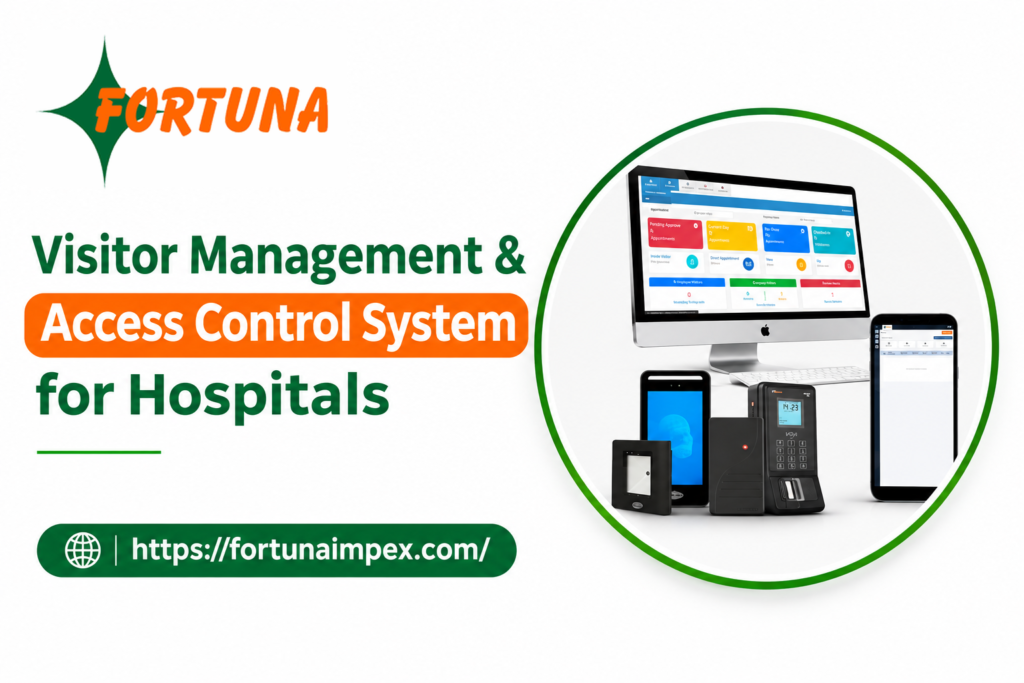
Traditional visitor registers and manual entry processes are often time-consuming and make it difficult to monitor who enters or exits the hospital. This is why implementing a Visitor Management & Access Control System for Hospitals has become increasingly important.
With advanced solutions from Fortuna Impex, hospitals can improve visitor tracking, restrict unauthorized access, and create a safer environment for patients, healthcare professionals, and visitors.
1. Improve Hospital Security
Hospital security is not limited to protecting medical equipment and infrastructure. It also involves ensuring that only authorized individuals can access sensitive areas.
A visitor management system helps hospitals register visitors, verify their identities, record entry details, and issue visitor passes. An access control system adds another layer of protection by restricting entry to authorized personnel.
This helps prevent unauthorized individuals from entering critical areas such as ICUs, operation theatres, laboratories, pharmacies, and medical record departments.
2. Maintain Accurate Visitor Records
Managing visitor information manually can lead to incomplete records, errors, and difficulties in retrieving information when required.
A digital visitor management system automatically maintains important visitor details, including:
- Visitor name and contact information.
- Date and time of entry.
- Purpose of the visit.
- Person or department being visited.
- Entry and exit records.
These digital records help hospital administrators monitor visitor activities and maintain better security documentation.
3. Protect Patients’ Privacy and Safety
Patient privacy is one of the most important responsibilities of any healthcare facility. Unauthorized visitors entering patient rooms or restricted medical areas can create security and privacy concerns.
A Visitor Management & Access Control System for Hospitals allows administrators to establish visitor permissions and control access to specific areas.
For example, access to maternity wards, ICUs, and private patient rooms can be restricted to approved visitors and authorized healthcare professionals.
This creates a more controlled and comfortable environment for patients.
4. Reduce Manual Work and Waiting Time
Traditional visitor registration involves maintaining physical registers, writing visitor details manually, and issuing paper passes. During busy hospital hours, this process can create long queues at reception counters.
An automated visitor management system simplifies the registration process and reduces administrative workload.
Depending on the system configuration, hospitals can use QR codes, ID cards, biometric authentication, or other identification methods to streamline visitor entry.
Reception staff can spend less time managing paperwork and more time assisting patients and visitors.
5. Control Access to Restricted Hospital Areas
Not every individual should have access to every department within a hospital.
An access control system helps administrators define permissions based on roles, departments, and authorization levels.
For instance:
- Doctors can access their assigned medical departments.
- Nurses can enter designated patient care areas.
- Administrative staff can access authorized office spaces.
- Visitors can enter only approved visitor zones.
- Maintenance personnel can access designated service areas.
This role-based access management improves security and reduces the possibility of unauthorized entry.
6. Improve Emergency Management
During emergencies, hospitals need accurate information about people present inside their premises.
Digital visitor records and access logs can help security teams and hospital administrators understand visitor movement and identify registered visitors.
These records can support emergency coordination, evacuation planning, and security investigations when required.
However, visitor management technology should work alongside established hospital emergency response and evacuation procedures.
7. Generate Reports and Monitor Activities
Hospital administrators need reliable information to evaluate security operations and visitor activities.
Modern visitor management solutions can generate reports covering:
- Daily visitor registrations.
- Visitor entry and exit timings.
- Department-wise visitor activity.
- Peak visiting hours.
- Access attempts and security events.
These reports help management identify operational gaps and make informed decisions about improving hospital security.
Why Choose Fortuna Impex for Hospital Visitor Management and Access Control?
Fortuna Impex provides biometric attendance and access control solutions designed to support modern security and workforce management requirements.
Hospitals looking to improve their visitor registration and entry management processes can explore suitable solutions based on their infrastructure, security requirements, and operational needs.
By implementing the right visitor management and access control technology, healthcare facilities can strengthen security, improve operational efficiency, and maintain better control over their premises.
Hospital security requires more than traditional security guards and manual visitor registers. A reliable Visitor Management & Access Control System for Hospitals helps healthcare facilities monitor visitors, protect restricted areas, maintain accurate records, and improve overall security management.
From patient privacy to emergency coordination, automated visitor management and access control solutions play an important role in creating safer healthcare environments.
Choose Fortuna Impex to explore modern biometric and access control solutions for your hospital’s security requirements.